
Indoor Air Quality Monitoring After the Rush: What Actually Stuck
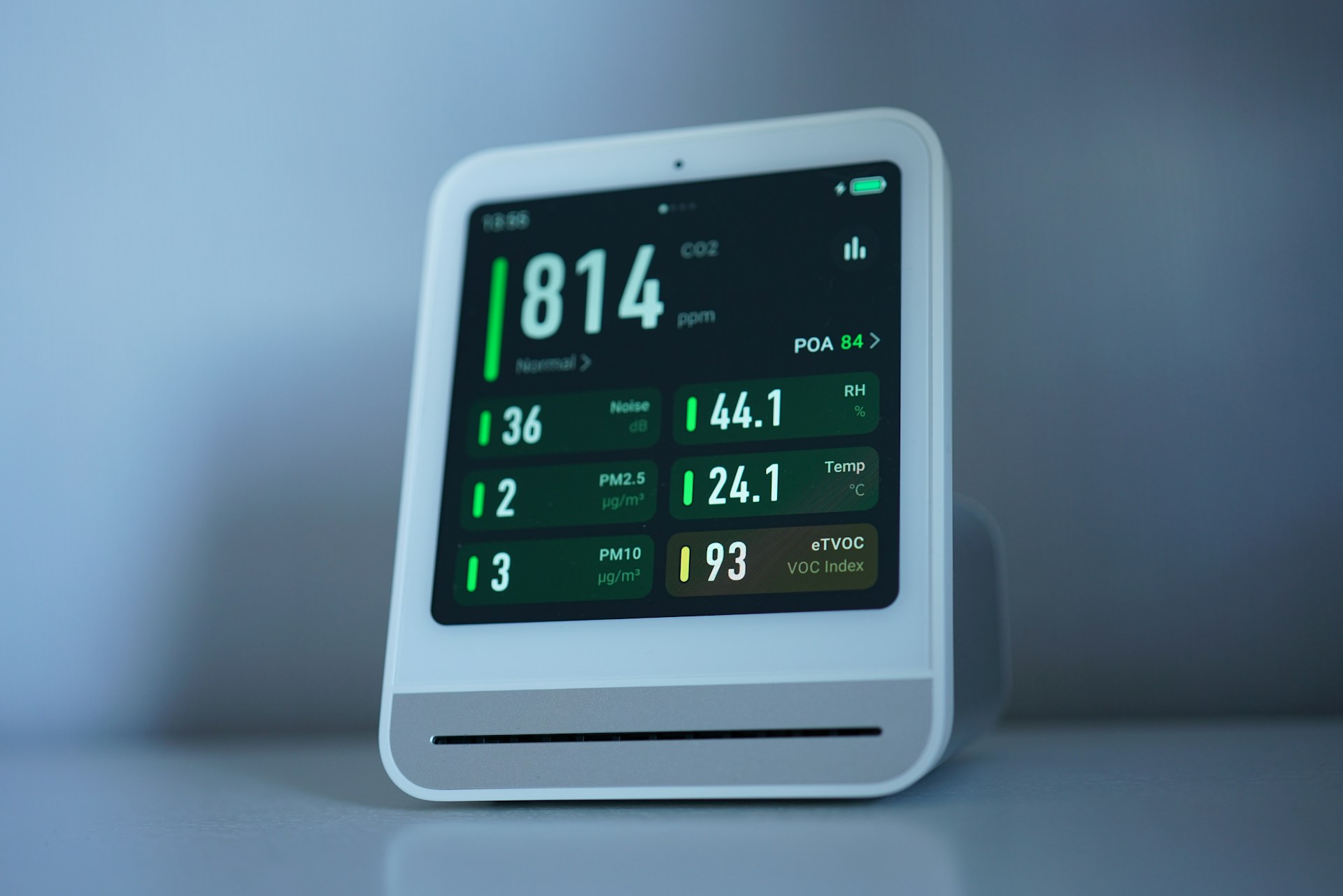
In 2020 and 2021, a lot of buildings bought air quality sensors the way people bought hand sanitizer. Fast, in bulk, and without much thought about what came next. Multi-sensor units went up in conference rooms, lobbies got display screens with a green smiley face, and outdoor air dampers were pinned open on the theory that more was always better.
A few years on, the picture is mixed. Some of those sensors are wired into the BMS and doing real work. Plenty are still on the wall, still glowing, reporting numbers nobody looks at. Some dashboards were switched off quietly when the subscription came up for renewal. What survived says a lot about what IAQ monitoring is actually good for.
The Sensors That Earned Their Keep
The clear winner is CO2, and not because it's the best measure of air quality. It isn't. CO2 stuck because it does something useful for the HVAC system. It's a reasonable proxy for occupancy and outdoor air delivered per person, and it plugs straight into the demand-controlled ventilation logic that ASHRAE 62.1 has allowed for years. A sensor that trims fan and conditioning energy on a half-empty Friday pays its own way. A sensor that only reports a number has to survive on goodwill.
Particulate sensing stuck in specific places: buildings near highways or industrial sites, regions that now see wildfire smoke most summers, and anywhere filters were upgraded and someone wanted proof it helped. TVOC sensors have the weakest record, for reasons that come down to what they actually measure.
The practice that stuck best wasn't a device at all. It was the habit of checking ventilation rates. Many facility teams found that their minimum outdoor air settings had crept down over the years, often from an energy tweak nobody remembered making. Simply looking was worth more than most of the hardware.
CO2, PM2.5 and TVOC Measure Different Problems
These three often share one display, which nudges people into treating them as a single score. They answer different questions.
CO2: A Ventilation Metric, Not a Pollutant Alarm
At normal indoor levels, CO2 tells you whether outdoor air is keeping up with the people in the room. A conference room climbing well past 1,000 ppm during a long meeting is telling you the zone is under-ventilated for its real occupancy. Useful. But CO2 says nothing about smoke, cooking particulates, cleaning chemicals or off-gassing from new furniture. Use true NDIR sensors for anything that drives control. The estimated CO2 value some combination units calculate from a VOC reading is not the same measurement and shouldn't be moving dampers.
PM2.5: Where Filtration Shows Up
Fine particulate is the one metric where outdoor air can make things worse. On a smoke day, opening dampers to chase a CO2 setpoint drags the problem inside. Low-cost optical particle sensors are good at trends and relative changes and weaker on absolute accuracy, and they tend to read high in very humid air. For most building purposes that's acceptable. You want to know that levels jumped, whether the filters are doing their job, and when to change strategy.
TVOC: Handle With Care
Most TVOC sensors in commercial devices are metal-oxide types that respond to a broad mix of compounds at very different sensitivities. A reading tells you something changed. It doesn't tell you what, or whether it matters. They react to hand sanitizer, perfume, a whiteboard marker. They're handy for spotting events like a floor refinish or a carpet install, and fine as a secondary input. Driving ventilation from TVOC alone tends to produce erratic damper movement and confused operators.
Drift Is the Problem Nobody Budgeted For
Here's what the rush purchases didn't account for: sensors age. NDIR CO2 sensors commonly drift over a few years, and many rely on automatic baseline correction. That algorithm assumes the space sees outdoor-level CO2 at some point each week, usually overnight when it's empty. Fine in an office. In spaces occupied around the clock, such as hospital wards, some labs and 24/7 operations rooms, the sensor slowly learns that an occupied baseline is fresh air. It then reads low, the DCV loop under-ventilates, and nobody notices because the number looks great.
Particle sensors get dirty. Optical paths collect dust, small fans wear, readings creep. Metal-oxide VOC sensors shift with age and with what they've been exposed to. None of this is a defect. It's the nature of inexpensive sensing, and it means the sensors need a maintenance plan like any other field device.
A practical routine doesn't need to be elaborate:
- Check CO2 sensors against a recently calibrated portable reference at least once a year, more often where they drive ventilation.
- Turn off automatic baseline correction in continuously occupied spaces and schedule manual calibration instead.
- Compare sensors serving similar zones. One that reads consistently and noticeably lower than its neighbors is suspect.
- Trend unoccupied readings. An empty office at 3 a.m. should sit near outdoor levels. If it doesn't, the sensor moved, not the air.
- Budget for replacement. Low-cost IAQ sensors behave more like consumables than infrastructure.
Tying IAQ to Ventilation Without Burning Energy
The pandemic response in many buildings was to maximize outdoor air and walk away. That's expensive in any climate and punishing in hot, humid ones, where every extra cfm of outdoor air brings a latent load the coil has to handle. Some buildings that ran this way watched humidity control slip, which creates its own IAQ problems.
Done properly, DCV does the opposite: ventilate to actual need, with a floor. The details matter. Reset outdoor air based on zone CO2, but keep the area-based component of the 62.1 ventilation rate in place regardless of occupancy. Put sensors in the zones rather than only in the return duct, because a return sensor averages a packed conference room with twenty empty offices, and the conference room loses. Add deadbands and rate limits so dampers aren't hunting every few minutes.
Then bring the other metrics in as overrides, not as the main control signal. If outdoor PM2.5 is high, cap outdoor air at the code minimum and lean on filtration and recirculation. If a TVOC spike lingers after a known event, a temporary purge mode makes sense. Keep these as rule-based exceptions an operator can see and understand. Blending everything into one opaque index makes troubleshooting miserable.
One trade-off deserves plain language. Higher-efficiency filters help with particulates but add pressure drop and fan energy. Confirm that the fan can still deliver design airflow through the upgraded filters before assuming the upgrade helped. More than a few retrofits ended up starving zones of air after a filter swap.
What a Sensible IAQ Setup Looks Like Now
The buildings doing this well have settled on something fairly modest. CO2 in densely occupied zones, tied to DCV. PM2.5 at the outdoor air intake and in a few representative zones, used for filtration decisions and smoke-day logic. TVOC, if it's there at all, as an informational point. All of it trended in the BMS with the same discipline as any other control point: consistent names, correct units, sensible alarms, and the last calibration date in the point description. Lobby screens are optional. Trend logs are not.
WELL and LEED both reward continuous monitoring, and certification has kept some sensors powered that would otherwise have been forgotten. That's a reasonable motivator, but a sensor only earns its place when someone acts on what it reports.
If you're responsible for a building full of sensors installed in 2021, the useful question isn't whether to add more. It's this: when was each one last checked against a reference, and which of them is telling a damper what to do right now?