
Smart Building Connection and Resilient Environments
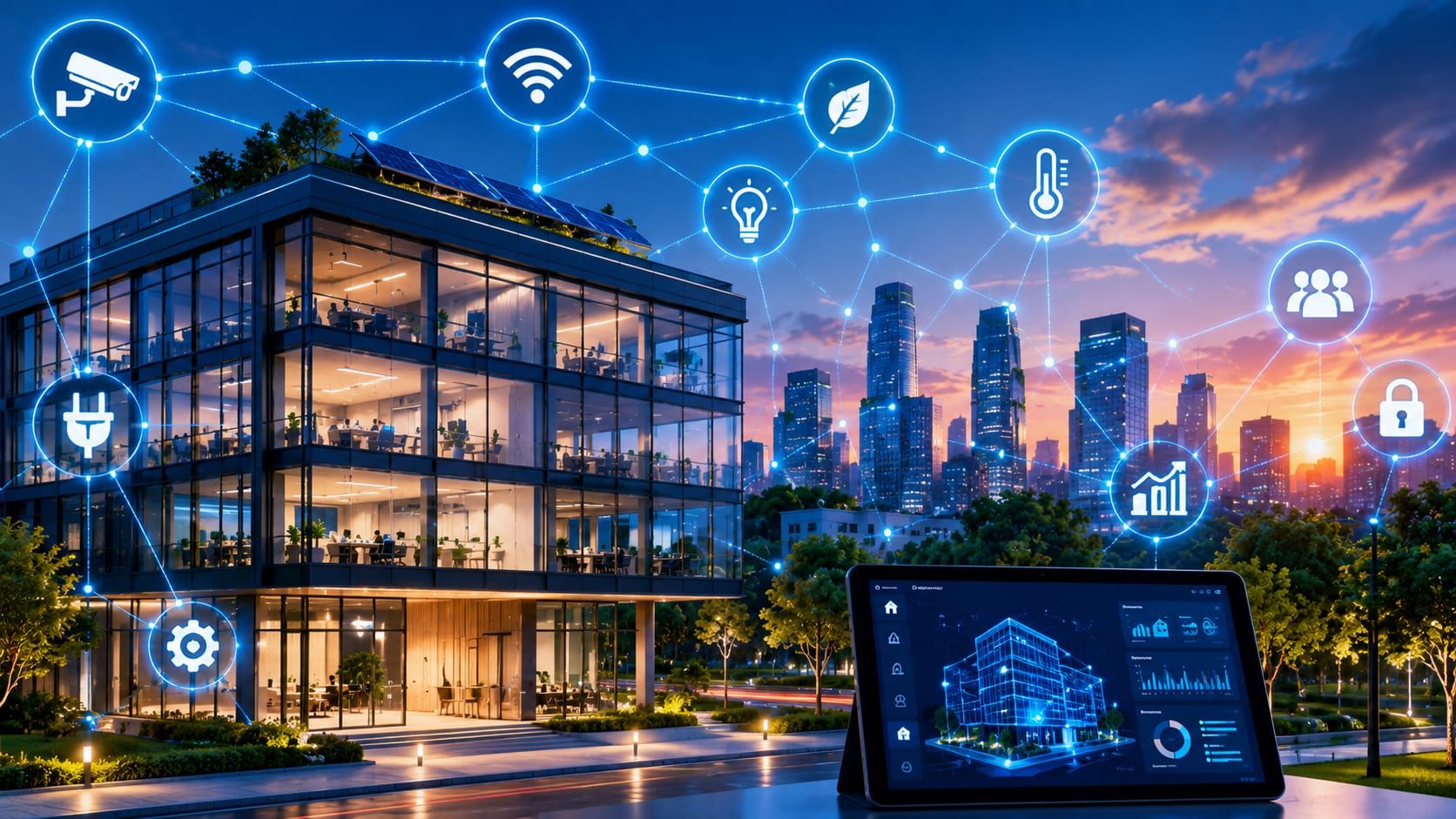
Smart infrastructure is rapidly becoming the foundation of modern cities, commercial buildings, transportation systems, and industrial facilities. As organizations seek greater efficiency, sustainability, and operational visibility, connected technologies are transforming how infrastructure is designed, managed, and optimized.
Traditionally, infrastructure systems operated independently. Building management systems, HVAC equipment, lighting controls, security platforms, energy management solutions, and operational technologies often functioned in separate environments with limited data sharing. Today, that approach is being replaced by integrated ecosystems that enable real-time communication between systems.
What Is Smart Infrastructure?
Smart infrastructure combines physical assets with digital technologies to improve performance, efficiency, and decision-making.
Examples include:
- Smart buildings
- Connected transportation networks
- Energy management systems
- Intelligent lighting systems
- Access control and security platforms
- IoT-enabled industrial facilities
- Smart city technologies
These systems collect data continuously and use analytics, automation, and connectivity to improve operations.
Key Drivers Behind Market Growth
Several trends are accelerating investment in smart infrastructure:
Digital Transformation
Organizations are increasingly investing in technologies that provide greater visibility and control over physical assets.
Sustainability Goals
Energy efficiency and carbon reduction initiatives continue to drive demand for smarter infrastructure solutions.
Operational Efficiency
Connected systems help reduce costs, automate processes, and improve resource utilization.
Artificial Intelligence
AI-powered analytics enable predictive maintenance, anomaly detection, and smarter decision-making.
IoT Expansion
The growing number of connected devices is creating new opportunities for automation and system integration.
The Importance of Integration
One of the most critical success factors in any smart infrastructure project is interoperability.
Organizations often operate equipment and technologies from multiple vendors. Without proper integration, valuable data remains siloed and operational efficiency suffers.
Successful smart infrastructure strategies focus on:
- Open connectivity
- Multi-vendor compatibility
- Data visibility
- Centralized management
- Scalable architecture
The ability to connect systems together often delivers greater value than any individual technology component.
Key Challenges
Despite strong growth, organizations continue to face several challenges:
- Integration complexity
- Cybersecurity concerns
- Legacy system compatibility
- Vendor fragmentation
- Data management requirements
- Scalability across multiple locations
Technology buyers increasingly prioritize solutions that simplify deployment while supporting long-term expansion.
Looking Ahead
The future of smart infrastructure will be defined by connectivity, automation, and intelligence. Organizations that successfully integrate their systems and leverage operational data will be better positioned to reduce costs, improve sustainability, and enhance user experiences.
As buildings, cities, and industrial environments become increasingly connected, smart infrastructure will continue to play a central role in digital transformation strategies worldwide.