
Cloud-Based vs On-Premise Access Control Platforms
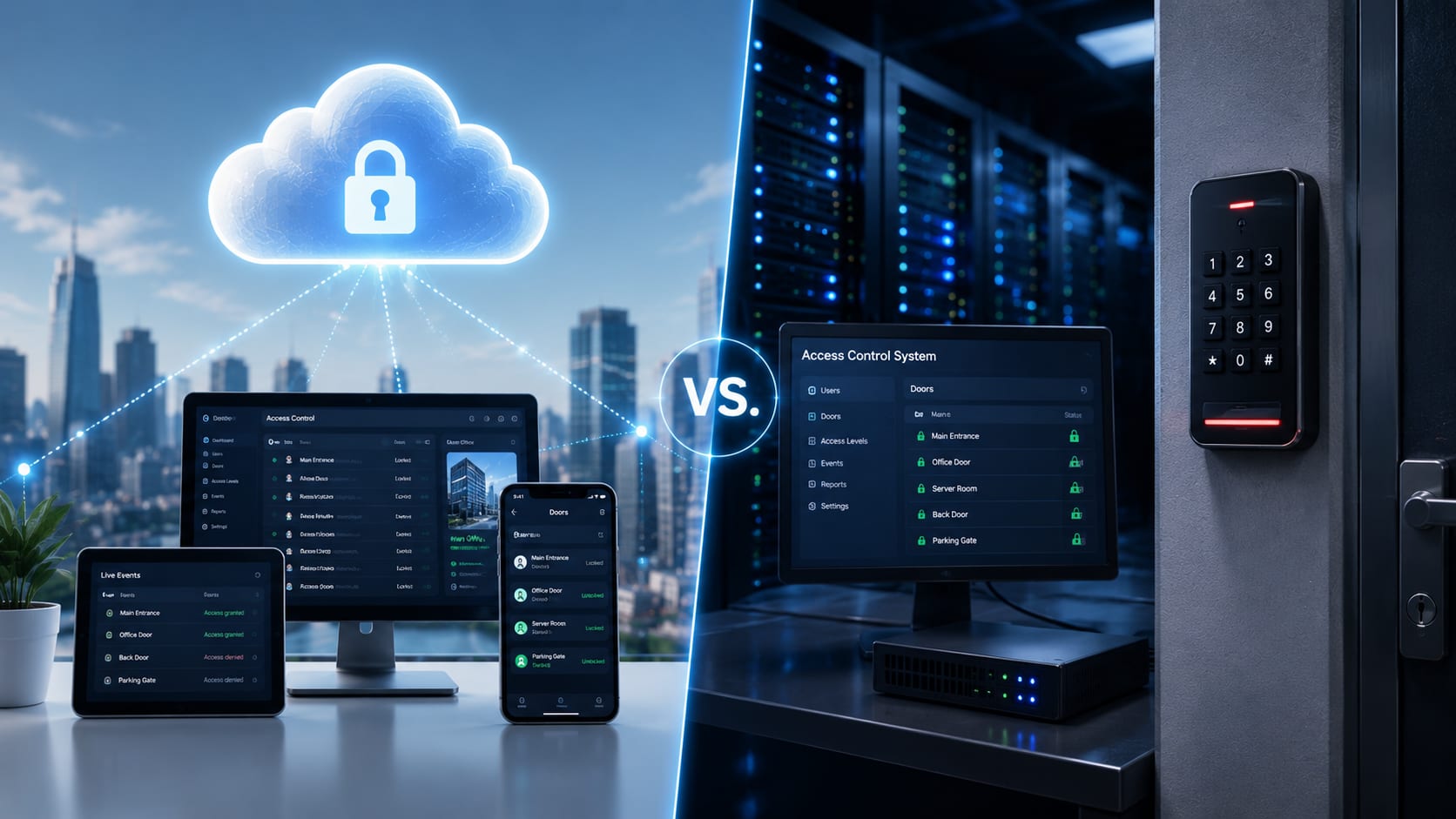
Access control systems are rapidly evolving from standalone security tools into connected platforms that support modern building operations. As organizations upgrade their infrastructure, one of the most common questions is whether to choose a cloud-based access control solution or a traditional on-premise platform.
Both approaches can deliver strong security and operational benefits, but they differ significantly in deployment, maintenance, scalability, and long-term flexibility.
What Is Cloud-Based Access Control?
Cloud-based access control platforms are managed through remote servers and accessed via web or mobile applications. Organizations can monitor and manage users, credentials, and facilities from anywhere with an internet connection.
Key Benefits
- Faster deployment
- Remote management
- Automatic software updates
- Mobile credentials and apps
- Centralized multi-site management
- Reduced infrastructure requirements
Cloud solutions are often preferred by organizations looking for flexibility, scalability, and simplified administration.
What Is On-Premise Access Control?
On-premise systems store software, databases, and management tools within the organization’s own infrastructure. All system management remains under the control of the internal IT or security team.
Key Benefits
- Full ownership of data
- Greater infrastructure control
- Custom security configurations
- Local system management
- Reduced dependency on external services
These solutions remain common in highly regulated industries where compliance and data sovereignty are critical requirements.
Side-by-Side Comparison
| Feature | Cloud-Based | On-Premise |
|---|---|---|
| Deployment Speed | High | Moderate |
| Initial Investment | Lower | Higher |
| Scalability | Excellent | Good |
| Remote Management | Excellent | Limited |
| Maintenance | Vendor Managed | Internal IT |
| Software Updates | Automatic | Manual |
| Data Control | Shared | Full Control |
| Infrastructure Requirements | Low | High |
Which Model Is Gaining Market Share?
The industry continues to move toward cloud-based solutions due to growing demand for centralized management, remote access, and lower operational overhead.
Organizations managing multiple facilities, hybrid work environments, or distributed teams often benefit from the flexibility cloud platforms provide. At the same time, industries with strict compliance requirements may still favor on-premise deployments for greater control over security policies and data storage.
Key Buying Considerations
Before selecting a platform, organizations should evaluate:
- Security and compliance requirements
- Number of locations being managed
- Internal IT capabilities
- Budget and total cost of ownership
- Future scalability needs
- Integration requirements with other building systems
Thrive Scor Insight
Cloud-based platforms generally achieve higher Thrive Scores™ for scalability, ease of deployment, remote management, and operational efficiency. On-premise solutions continue to score well in environments where compliance, customization, and direct infrastructure control are top priorities.
For most modern organizations, the decision is no longer about security versus convenience it is about selecting the model that best supports long-term business and operational goals.